
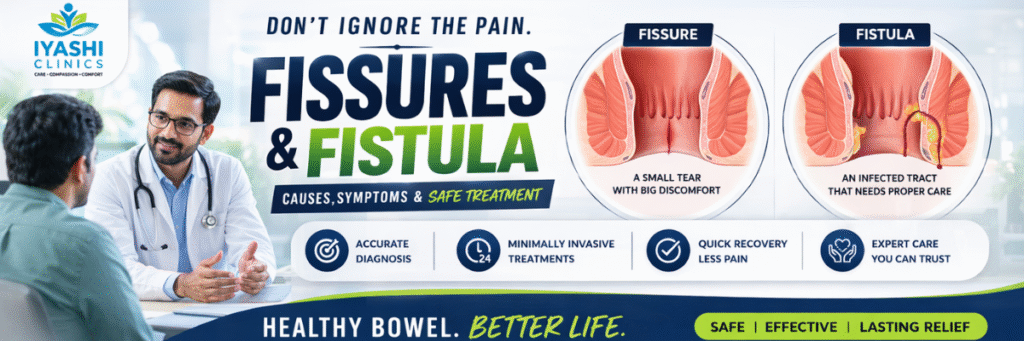
Fissures and fistula are common anorectal conditions that can cause significant discomfort and affect daily life. While both conditions occur in the anal region, they differ in causes, symptoms, and treatment approaches. Early diagnosis and proper medical care are essential to avoid complications and ensure faster recovery.
Modern healthcare facilities now offer advanced, minimally invasive procedures for treating fissures and fistula with minimal pain and quick recovery time. Understanding these conditions helps patients seek timely treatment and avoid long-term complications.
What Are Fissures and Fistula?
Anal Fissure
An anal fissure is a small tear in the lining of the anal canal. It usually develops due to constipation, hard stools, or excessive straining during bowel movements.
Anal Fistula
An anal fistula is an abnormal tunnel that forms between the anal canal and the skin near the anus. It typically develops due to infection in anal glands.
Both conditions require different treatment strategies, though they may share similar symptoms.
Difference Between Fissures and Fistula
| Feature | Anal Fissure | Anal Fistula |
| Condition | Tear in anal lining | Abnormal tunnel |
| Pain | Severe during bowel movement | Persistent throbbing pain |
| Bleeding | Common | Less common |
| Discharge | Rare | Common pus discharge |
| Treatment | Medication & lifestyle | Often surgical |
Understanding the difference helps in choosing the right treatment approach.
Common Symptoms of Fissures and Fistula
Recognizing early symptoms can help you seek timely care.
Symptoms of Anal Fissure
- Sharp pain during bowel movements
- Bright red bleeding
- Burning sensation
- Itching in anal area
- Visible tear near anus
Symptoms of Anal Fistula
- Persistent anal pain
- Swelling near anus
- Pus or fluid discharge
- Fever in severe cases
- Skin irritation around anus
If these symptoms persist, medical consultation is necessary.
Causes of Fissures and Fistula
Several factors contribute to these conditions:
Causes of Anal Fissure
- Chronic constipation
- Passing hard stools
- Low fiber diet
- Dehydration
- Pregnancy
- Prolonged diarrhea
Causes of Anal Fistula
- Anal abscess
- Crohn’s disease
- Tuberculosis
- Previous anal surgery
- Injury or infection
Identifying the root cause ensures effective treatment.
Risk Factors
You may be at higher risk if you:
- Sit for long periods
- Have sedentary lifestyle
- Eat low fiber diet
- Strain during bowel movements
- Are overweight
- Have chronic digestive issues
Preventive care can reduce recurrence.
Diagnosis of Fissures and Fistula
Doctors use various methods for diagnosis:
Physical Examination
Visual inspection for external signs.
Digital Rectal Examination
Manual examination for swelling or infection.
Proctoscopy
Used to check internal anal canal.
MRI or Ultrasound
Recommended for complex fistula cases.
Accurate diagnosis helps determine the best treatment plan.
Treatment Options for Fissures
Non-Surgical Treatment
Mild fissures can be treated with:
- High fiber diet
- Increased water intake
- Stool softeners
- Pain relief ointments
- Warm sitz baths
These methods promote healing naturally.
Medical Treatment
Doctors may prescribe:
- Topical creams
- Anti-inflammatory medication
- Muscle relaxants
- Antibiotics if infection present
Treatment Options for Fistula
Unlike fissures, fistula often requires procedural treatment.
Minimally Invasive Procedures
- Laser fistula treatment
- Fistulotomy
- Seton placement
- LIFT procedure
These techniques offer:
- Minimal pain
- Faster recovery
- Low recurrence rate
- Outpatient treatment
Benefits of Advanced Laser Treatment
Modern laser procedures provide:
- No large incisions
- Minimal bleeding
- Quick recovery
- Less hospital stay
- Reduced complications
- Early return to work
These advanced solutions improve patient comfort.
Lifestyle Changes to Prevent Fissures and Fistula
Follow these habits:
- Eat fiber-rich foods
- Drink plenty of water
- Exercise regularly
- Avoid straining
- Maintain healthy weight
- Practice good hygiene
Prevention reduces recurrence risk.
Diet Plan for Faster Healing
Recommended Foods
- Whole grains
- Fruits like papaya & banana
- Green leafy vegetables
- Oats and bran
- Lentils and beans
Foods to Avoid
- Spicy food
- Processed food
- Junk food
- Alcohol
- Excess caffeine
Balanced diet improves digestion.
Recovery After Treatment
Recovery depends on treatment type:
After Fissure Treatment
- Healing within few weeks
- Mild discomfort initially
- Resume normal activities quickly
After Fistula Procedure
- Recovery in 1–2 weeks
- Follow hygiene instructions
- Take prescribed medication
Following doctor guidance ensures smooth recovery.
When Should You See a Doctor?
Consult a specialist if you experience:
- Persistent anal pain
- Bleeding during bowel movements
- Pus discharge
- Swelling near anus
- Fever with anal pain
Early treatment prevents complications.
Importance of Choosing the Right Clinic
Select a clinic that offers:
- Experienced specialists
- Advanced technology
- Minimally invasive procedures
- Hygienic environment
- Personalized care
- Transparent pricing
Proper care ensures effective treatment.
Book Consultation for Fissures and Fistula Treatment
If you are experiencing symptoms, early consultation is highly recommended. Expert evaluation helps determine the right treatment plan and prevents complications.
You can easily schedule your consultation by visiting the contact page:
Consult specialists for fissures and fistula treatment
Conclusion
Fissures and fistula are painful conditions that require timely medical attention. With modern treatment options including laser procedures, patients can now experience quick recovery with minimal discomfort. Early diagnosis, proper diet, and lifestyle changes play a key role in preventing recurrence.
Seeking expert medical care ensures accurate diagnosis and effective treatment. If you notice symptoms, don’t delay consultation and take the first step toward a pain-free life today.